Dream of the childhood backyard through a Other lens
Perspective: other
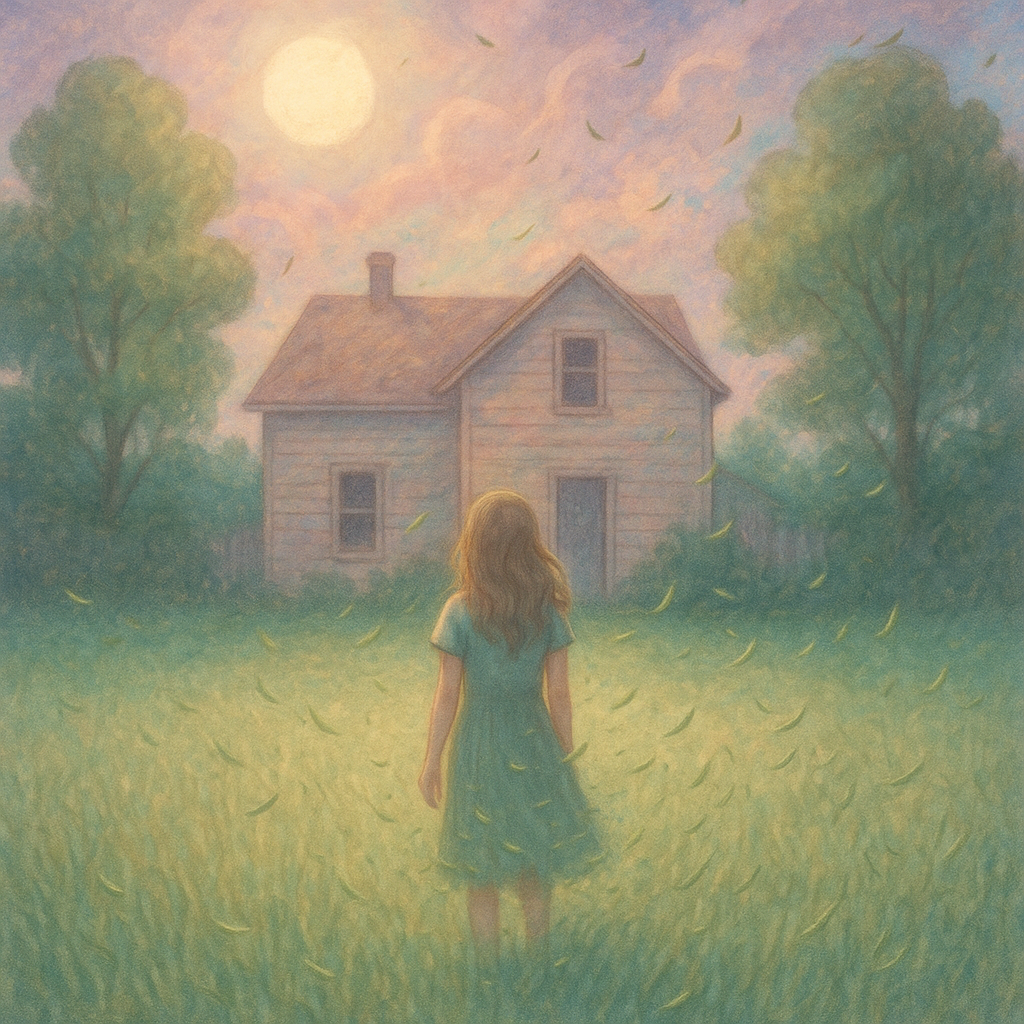
Your Dream
I was back in my old backyard, the one behind the house I grew up in, and it was late afternoon. The air smelled like cut grass—honestly, like when Dad used to mow, and the clippings would stick to my shoes. The weird thing was that the fence looked sort of warped, taller in some spots but then sagging like it might collapse. I could hear cicadas buzzing, but when I looked around, I couldn't spot any, just these blurry shadows sliding along the fence posts. I wandered over to the garden bed where Mom used to plant tomatoes. It was wild with weeds now, but there were still a few sad tomato plants tangled up in the mess. The fruit looked enormous, way bigger than they ever got in real life—almost grapefruit size—and sort of orange instead of red. I picked one and it felt kinda warm, which was strange, but I bit into it anyway. It tasted sweet, honestly more like a peach than a tomato, and the juice ran down my wrist and got sticky. For some reason, I remembered the feeling of dirt under my fingernails, like from digging in the garden as a kid, and I looked down and, yeah, my hands were filthy. Then, I found my old plastic jump rope kicked under the lilac bush. The handles were faded and I wondered if it would still work. I tried skipping, but the rope kept getting caught on the uneven bricks of the patio. I remember feeling a little frustrated but also amused—like, of course this would happen. Dad's old grill was still there, except it had turned this weird shade of greenish-gray and there was an empty mayonnaise jar sitting on top of it, no lid, just a little rainwater sloshing inside. I thought about how Mom always saved glass jars for “something useful.” The sun sank behind the neighbor’s garage and I started to worry I’d get called in for dinner, but then I woke up.
Your Dream, Revealed
A calm, guided space to explore what this dream may be reflecting back to you.
Dream Overview
This dream unfolds in the familiar backyard of childhood, yet its mood is tinged with both nostalgia and a subtle sense of distortion. The emotional tone is bittersweet, blending warmth from sensory memories—like the smell of cut grass and sticky tomato juice—with unease at warped boundaries and neglected spaces. Central tension arises from the interplay between comfort in the known and discomfort at its gradual transformation: the warped fence, overgrown garden, and faded toys. Key symbols, such as the enormous orange tomatoes and the malfunctioning jump rope, highlight the dreamer's struggle to reconcile past joys with present realities. The inner conflict is evident in moments of both amusement and frustration, particularly when old pleasures no longer work as expected. The presence of parental figures is woven into the environment, never seen but constantly felt through references to their habits and objects. What makes this dream distinctive is the intense sensory detail and the way the dreamer moves through layers of memory, loss, and adaptation, all while remaining anchored in a landscape that is both safe and subtly unsettling.
The dream opens with the dreamer returning to a once-familiar backyard, marked by sensory richness and a dusk-like atmosphere that signals the end of a day and, metaphorically, a stage of life. The first phase centers on exploring boundaries: the warped fence and the search for cicadas that cannot be seen but are clearly heard. This phase introduces uncertainty and a subtle longing for the clarity of childhood structure.
Next, the focus shifts to the garden bed, a site of both wildness and continuity. The oversized, strangely colored tomatoes set against tangled weeds highlight a mingling of nostalgia and the recognition that some things have changed beyond repair. The act of eating the tomato—a blend of comfort and oddity—marks a turning point as the dreamer literally and figuratively tastes the unfamiliar in the familiar.
The discovery of the jump rope under the lilac bush initiates a new phase characterized by attempts to reclaim lost innocence or playfulness. The rope's repeated failure to function as it once did deepens the sense of dissonance between past and present, evoking both frustration and reluctant humor.
In the final moments, attention shifts to objects tied to the parents’ habits—the old grill, the rainwater-filled jar—serving as reminders of enduring influence and the way routines persist, sometimes stripped of their original purpose. The dream closes with the sun setting and the approach of an old summons, blending anticipation with the awareness that this world can no longer be inhabited as before.
Key Findings
• The warped fence signals shifting boundaries of safety and belonging, echoing uncertainty about changes in childhood foundations. • Enormous, orange tomatoes in a tangled bed reveal a longing for growth and sweetness amid life's messiness and unpredictability. • The jump rope's failure to function smoothly on the uneven patio exposes frustration with recapturing uncomplicated joy from the past. • The grill with its odd color and rainwater-filled mayonnaise jar suggests lingering usefulness in what feels outdated or repurposed, pointing to the enduring presence of parental influence. • Anticipating being called in for dinner marks a tension between freedom in memory and the pull of old routines and expectations.
Symbol Interpretation
Warped Fence
For this dreamer, the fence represents the fragile boundaries of home and self formed in childhood, now distorted by time and change.
Enormous Orange Tomato
This tomato embodies an exaggerated hope for sweetness or reward drawn from childhood memories, but its unfamiliar color hints at transformation or estrangement from the original experience.
Plastic Jump Rope
The jump rope stands for attempts to reclaim simple pleasures and resilience, yet it also reveals how those pleasures are complicated by life's current obstacles.
Dad's Grill and Mayonnaise Jar
The grill and jar together reveal the persistence of parental influence, but also the strangeness of inherited habits and their uncertain relevance now.
Filthy Hands
Dirty hands reflect the immersive, tactile nature of memory and the acceptance of life's mess as a part of genuine experience.
Cicada Shadows
The unseen cicadas, reduced to shadows, evoke the elusive presence of the past—heard but not seen, felt but not fully grasped.
Emotional Landscape
The dream is suffused with longing, not only for a return to childhood but for the certainty and comfort that came with it. This is especially vivid in the sensory recall of cut grass, sticky juice, and dirt under the nails—all tangible, grounding sensations that contrast with the less solid, more ambiguous elements like the warped fence and cicada shadows.
Frustration surfaces in the scene with the jump rope, where the dreamer’s efforts to recapture a sense of playful mastery are thwarted by the changed environment. The amusement that follows this frustration is telling—it suggests a capacity to laugh at one’s own limitations and the inevitability of change, even as it stings.
There is a quiet grief in the neglect of the garden and the strange transformation of once-cherished objects. The tomatoes, the grill, and the rainwater jar each elicit a sense of loss, but also a recognition of what remains: the potential for sweetness, the persistence of usefulness, the endurance of memory.
As the sun sets and the dreamer anticipates being called in for dinner, a subtle anxiety emerges—the fear of being drawn back into old roles or expectations, even as those structures have faded. The dream closes not with resolution, but with a deep ambivalence about belonging and the passage of time.
Psychological Insight
The dreamer's journey through the backyard is a negotiation with change—an attempt to reconcile the desire for past security with the reality of its transformation. The warped fence and chaotic garden reveal a mind grappling with shifting boundaries and the unpredictability of what once seemed knowable.
Picking and eating the oversized tomato, despite its strangeness, reflects a willingness to engage with memory even when it no longer matches expectation. The sweet, peach-like flavor is a reward, but it’s also a reminder that nostalgia can distort or embellish what was once ordinary.
The jump rope episode exposes a more vulnerable aspect: the struggle to recapture joy and the recognition that childhood pleasures cannot be perfectly revived. The dreamer’s frustration, tempered by humor, points to an underlying acceptance of imperfection in the process of looking back.
Parental influence lingers in the form of objects and routines, suggesting both comfort and constraint. The dreamer is aware of these inherited patterns, questioning their relevance yet unable to fully discard them. This duality creates a tension between autonomy and the enduring pull of family roles.
Spiritual Perspective
Given an 'other' spiritual or belief context, the dream does not gravitate toward traditional themes of transcendence or ancestral guidance. Instead, it dwells in the subtle, almost secular sacredness of memory and the rituals of daily life. The attention to sensory detail and ordinary objects—the smell of grass, the saving of jars—suggests a belief in the quiet significance of lived experience.
The absence of overt spiritual imagery shifts the focus onto the material traces of family and habit, imbuing them with quiet meaning. The dreamer’s respect for these remnants, even as their utility fades, reflects a worldview that values continuity and presence over explicit metaphysical answers.
Integrative Insight
This dream intricately weaves together loss, adaptation, and the search for meaning within the mundane. The warped boundaries and altered objects do not merely signal decay; they invite the dreamer to recognize that the past, with all its sweetness and mess, is not meant to be perfectly preserved or reclaimed. Even as frustration arises in the face of change—the uncooperative jump rope, the untended garden—there is humor and tenderness in the attempt.
The enduring presence of parental symbols suggests that influence and memory are not static, but evolve as the dreamer’s own perspective deepens. The dream, in its gentle confrontation, asks whether comfort can be found not by restoring what was, but by embracing the strange and beautiful forms that remain.
You have not lost the backyard; you have learned to see its shadows and sweetness anew.
Reflection Questions
- When you tasted the oversized tomato and found it sweeter and stranger than expected, what current part of your life feels similarly transformed from what you anticipated?
- How does the frustration and amusement you felt with the jump rope mirror your response to setbacks or changes in familiar routines?
- In recalling your parents' habits—the saving of jars, the presence of the old grill—what do you notice about which family patterns you keep, adapt, or question now?